
七宗罪
全球首款全自主打网球机器人亮相,与运动员开展人机混双对打_我的网站

一 | Most missing adults are found quickly, but gaps in the system can have deadly consequences Police search for Jang Mi-ran, a 37-year-old reported missing in May, at a palm farm in Hallim-eup, Jeju Island. Jang was found dead Monday. (Yonhap)The death of Jang Mi-ran after her missing-person case was allegedly closed on false grounds has renewed scrutiny of South Korea’s system for finding missing adults.South Korea tracks missing-person reports involving adults, but ordinary adult cases are not covered by the same legal framework that allows nationwide alerts, certain forms of location tracking and DNA testing for children, people with specified disabilities and people with dementia.More than 70,000 adults were reported missing each year between 2022 and 2025. Most cases were resolved quickly, with 89.4 percent closed within a day last year and 99 percent within a month, according to National Police Agency data.Of the 70,591 adult missing-person cases closed in 2025, 931 involved people who were found dead.Jang’s case has drawn attention to what can happen when a case is closed before a missing person’s safety has been confirmed.A Jeju police officer surnamed Bu is accused of falsely telling Jang’s boyfriend and family that she was safe but did not want to be found. Police have said they found no records showing that Bu contacted her.Bu is accused of making a similar false claim in another missing-person case involving a man in his 60s, who was also later found dead.The cases have revived a long-running debate over whether police need stronger legal authority to search for missing adults, and how far those powers should extend without infringing on privacy.Gaps in adult casesJang’s cousin reportedly went to Seoul’s Nowon Police Station on July 19 to request another search for her, about two months after Bu allegedly told the family that Jang had been contacted and was safe.Nowon officials reportedly questioned whether Jang, as an adult, might simply have left voluntarily.The high rate of quick case closures has raised concern that some adult cases are treated as routine disappearances. Bu handled and closed 298 missing-person cases during roughly 17 months on a missing-person team.Meanwhile, the number of cases ending in death is not insignificant. Between 2016 and 2025, 13,639 missing adults were eventually found dead, an average of about 1,364 a year. Thousands of long-term cases also remain unsolved. Police search for Jang Mi-ran, a 37-year-old reported missing in May, at a harbor in Jeju Island. Jang was found dead on Monday. (Yonhap)Police have fewer tools in ordinary adult cases.Nationwide missing-person alerts are generally sent out only for minors, people with certain disabilities and people with dementia. Of the 3,126 people found last year under that system, 696, or 22.3 percent, were located after reports from members of the public who had seen an alert.Police searches and investigations accounted for 39.2 percent of discoveries, according to a report jointly submitted by the National Police Agency and the Ministry of Health and Welfare.Ordinary missing adults generally do not qualify for such alerts.Police have used DNA testing since 2004 to identify missing children and other eligible groups. Ordinary adult cases are not covered by the same DNA collection and comparison framework.The scale of adult disappearances is also larger. About 70,800 adult missing-person reports were filed in 2025, more than twice the roughly 29,600 involving children.Legislative pushSouth Korea enacted the Act on the Protection and Support of Missing Children and Others in 2005, establishing the legal basis for many of the search tools used today. There is no equivalent comprehensive law for ordinary missing adults.Lawmakers have made repeated attempts to fill that gap.A bill proposed in 2024 by Rep. Lim Ho-seon of the Democratic Party of Korea would establish a separate information system for missing adults and give police clearer authority to obtain location and travel information.The proposal remains pending at the National Assembly alongside similar bills.Supporters argue that broader powers could help police act more quickly when an adult is in danger. Opponents warn that the same powers could be used to track people who have deliberately chosen to leave home or cut off contact.Adults generally have the right to decide where they live and whom they remain in contact with, making the issue more complicated than cases involving children or vulnerable people.Police can already obtain location information in some cases involving signs of imminent danger. The unresolved question is whether that authority should be expanded for missing adults more broadly.。
 据介绍,这款机器人来自银河通用,名为“银河星仔”。IT之家了解到,这款机器人身高约 1.75 米,搭载 LATENT 智能规控算法,不依赖预编程,通过深度强化学习自主掌握网球技能。同时,其双目视觉系统可在 0.1 秒内锁定时速超 50 公里的来球,全场灵活移动、调整姿态并挥拍击球。
二 | 实测正手击球成功率达 90.9%,可稳定完成 20 轮以上连续对拉,自主控制回球落点与节奏,动作流畅接近人类运动员。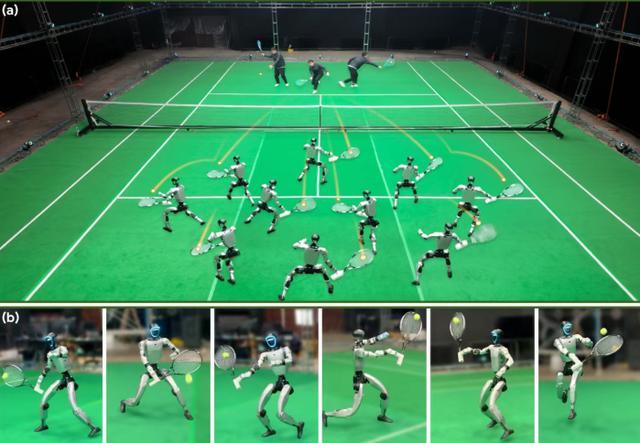 运动会现场,这名机器人与演员李昀锐和网球名将郑洁一起,上演一场人机混双对打,为现场观众带来精彩表演。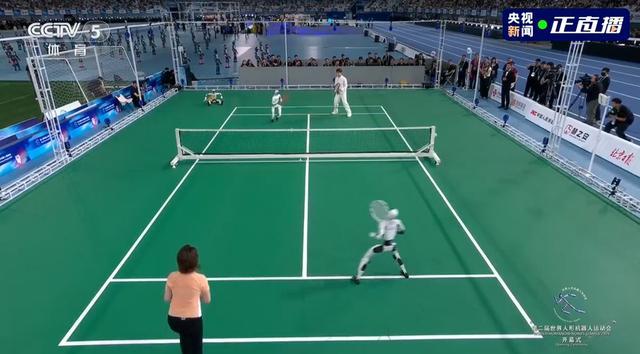
Current article:http://shaimeihaoangguanwahuaisaiyao.buzz/news/20260826_232.html
Published on:06:28:16
我的网站最近更新
- Snap三季度营收不及预期 Snap美股盘后暴跌22%
- 余承东晒华为智慧屏 电视伪装成艺术画 完全分不清
- 行业大咖共商营销新模式,汽车之家重庆思享会成功举办
- 终年66岁!意大利传奇巴雷西离世!再见米兰6号
- 炮弹炸到华尔街,聊聊原油、重资产、海运和军工
- Steam的“技术支持:未知错误”:作为一个程序员既可以是积极的也可以是邪恶的
- 2025年最便宜京东618活动时间已确定:6月17日晚上8点开始优惠力度最大
- 【市场速递】8月26日外汇市场日盘交易情况
- 官方:快船2年1320万续约后卫比尔 含球员选项
- PM to inaugurate Kisan Samman Sammelan on Monday
- 万人说新疆丨阿迪莱:我爱五十八中,这里给了我家的温暖
- 丹·艾克罗伊德揭秘 捉鬼敢死队™ 原版服装样貌
- 美国宣布撤销对叙利亚的认定
- 安踏儿童WSE亚太区青少年冠军赛圆满收官,骇浪5体测跑鞋赛场首秀
- 伊朗副外长称对美先发制人也是选项
- 'China Is Awesome': Elon Musk recommends visiting China
- 高光褪去CXO产业如何走出“围城”
- Chinese films shine as summer box office heats up
- 小松鼠在济南森林公园“安了家”
- [단독] 이 대통령, 공직 경력 특례 폐지 이행 지시
- 因 GTA6 泄密被 Take-Two 发传票点名,相关 YouTuber 坚称自己清白
- “王老吉”商标战火再起,给出海企业提了个醒
- 中央气象台发布强对流天气预报:内蒙古、吉林、宁夏、山西、河北、北京、山东、安徽、江苏、湖北、湖南、江西、浙江等地将有短时强降水
- Louvre Museum is being evacuated after a threat while France is under high alert
我的网站热门资讯
- 「母は早く家に帰りたがっています」自宅での看取りを覚悟した家族だったが…食事をとらなくなった認知症の70代母が、「まさかの復活」を遂げた理由
- Australians held over alleged SL bribes
- Chinese-made infrared telescope with domestic detectors achieves astronomical imaging, reducing foreign reliance
- 罗马诺:摩纳哥有意签热刺中场萨尔,双方目前正在谈判
- 今年首个台风红色预警!山东启动四级应急响应,青岛多个景区最新发布→_2022年首个台风红色预警发布_梅花
- Former NSA worker pleads guilty to trying to sell US secrets to Russia
- 盘点你不知道的16个苹果iOS 16隐藏功能_iPhone_用户
- 央行将开展隔夜逆回购操作
- 基金周策略:坚定看好汽车板块下半年的投资机会_bp_预期
- 【黑色早评】山西长治一座煤矿复产,京唐港印尼焦煤入晋专列开通
- 国内首款3nm智驾芯片 小米玄戒D100发布:2027年商用
- 超节点背后,国产AI芯片正在重写竞争规则
- Be so ready that B'desh is never famine-struck: PM
- 爱心托管点亮缤纷假期
- Nginx limit_req 限流:几行配置挡住大部分CC攻击
- 「飢えているのがわからないのか」金正恩の“非常識な指示”に国民は絶望
- 对中东地缘冲突担忧缓解,国际油价25日显著下跌,当日收盘时下跌超3%
- 世界人形机器人运动会北京开幕 上千台机器人亮相
- 二手电商要“变天”?多家平台瞄准以旧换新
- 文化中国行丨保定西大街:客自京津来 古巷品文韵
- 宏观数据发布,哪些值得关注?
- 华硕公布 TUF Gaming K4 Magnetic 磁轴键盘:天选 TX75 兄弟型号
- Space-flown Sichuan embroidery showcased in Chengdu
- “本土+国际”双导师 泉州推进时尚课程落地